


“That’s not fair.” When a child brings those words home from school, it can be difficult to know where to begin. We want to understand what happened. We also want to help our child explain what they need and think about what could happen next.
I’d begin with a conversation that gives the child time to speak. Books can offer another starting point. A character’s experience lets us ask about being heard, being safe or being included before asking a child to explain an experience of their own.
The thread I’d follow through this reading list is simple: help children recognise what they should be able to expect, find words for a concern, and identify adults who can help. Having a voice doesn’t mean getting every decision your way. It does mean being taken seriously.

Start with rights, then make them concrete
Children’s rights don’t depend on good behaviour. Safety, dignity and being heard aren’t rewards. Children also need guidance in respecting other people’s rights and repairing harm. Adults are responsible for providing the support and structure that make this possible.
In the Web of Rights, I bring these ideas together through shared language about dignity, voice, boundaries and responsibility.
The UN Convention on the Rights of the Child, explained by UNICEF, is a useful reference for families. It includes education, protection from discrimination, privacy, culture and children’s participation in decisions affecting them. The connections below are suggestions for family discussion, not claims that every book teaches the Convention directly.
This selection centres Canadian writers and creators, including Black and Indigenous voices and women authors. Age ranges are reading guidance, not a test of readiness. Choose with your child’s interests and comfort in mind, and feel free to read together.
This post includes Amazon affiliate links. As an Amazon Associate I earn from qualifying purchases. The books were selected for the conversations they can support with children. You can also look for them at your local library or independent bookstore.
Picture books: a starting point for younger children
Nibi’s Water Song
Sunshine Tenasco; illustrated by Chief Lady Bird | Ages 4–8

Nibi is looking for clean water. Her search grows into a shared effort, giving families a way to talk about an essential need and what happens when a community speaks up.
I’d use this story to ask who is responsible for making sure children have safe water. Children can help create change, but they shouldn’t have to earn access to something they need to live.
A question to try: Who could Nibi turn to for help, and what should the adults do?
A Likkle Miss Lou
Nadia L. Hohn; illustrated by Eugenie Fernandes | Ages 4–8
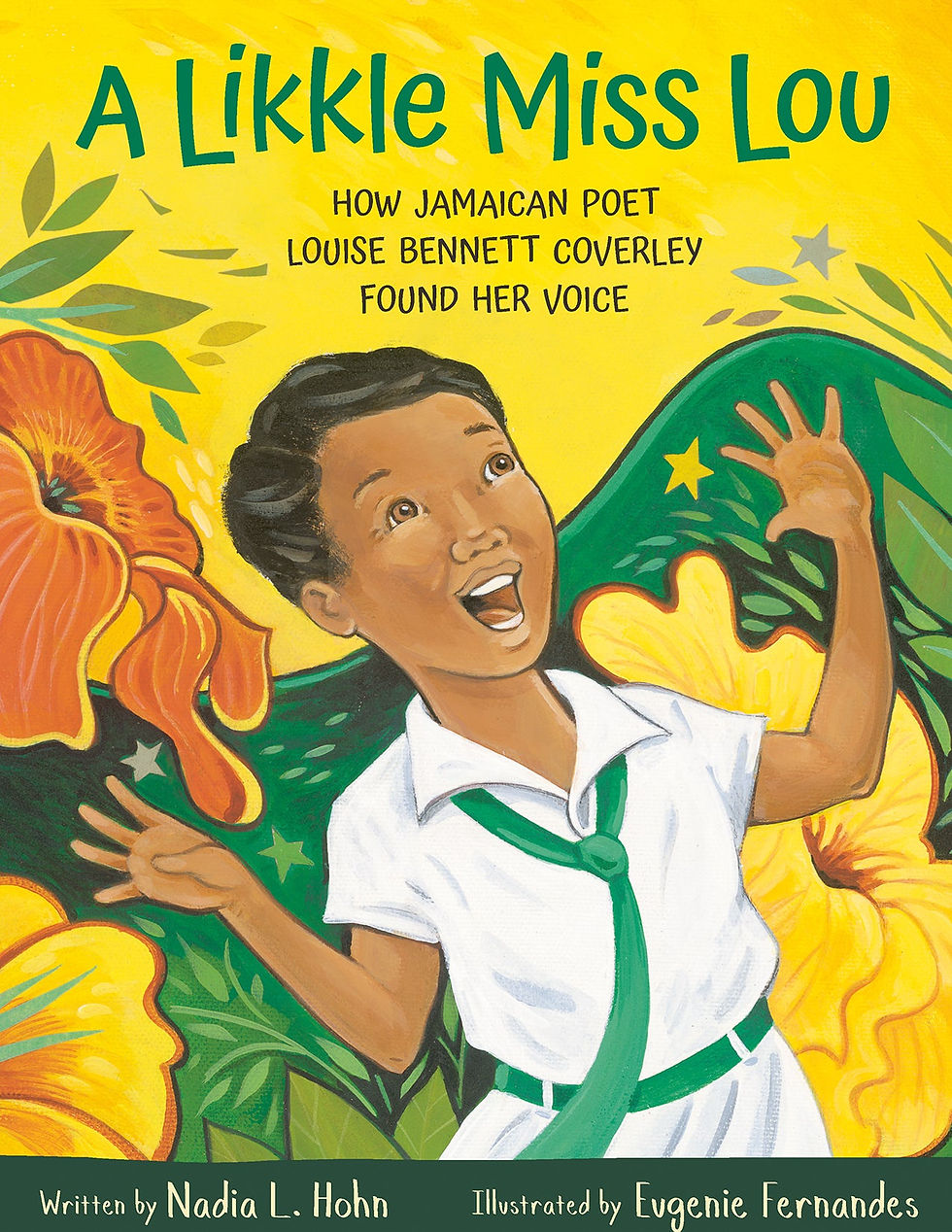
This picture book introduces the early life of Jamaican poet Louise Bennett Coverley and her developing confidence in the language and stories around her.
A useful conversation here is about whose language is welcomed. A child’s voice includes the words, sounds and family stories they bring to school. I’d connect this book with belonging and respect for culture, without suggesting that every difference can be resolved by confidence alone.
A question to try: What would help someone feel comfortable sharing the language they use at home?
I Have the Right to Be a Child
Alain Serres; illustrated by Aurélia Fronty; translated by Helen Mixter | Ages 4–7

This picture book names children’s rights directly, including education, safety, food and water. Its straightforward approach makes it a useful companion to stories that explore these ideas through characters.
I’d read it slowly and let a child choose one right to discuss. Being able to name a right gives a child clearer language than simply saying something feels wrong. This is the international selection in a list that otherwise centres Canadian writers and creators; its English-language publisher is Canada’s Groundwood Books.
A question to try: What does this right look like during an ordinary school day?
Middle-grade readers: fairness at school and in community
Shannen and the Dream for a School
Janet Wilson | Ages 9–12

This nonfiction book tells the story of Shannen Koostachin and the campaign for a safe school in Attawapiskat. It connects a young person’s advocacy with a community’s demand for equitable education.
I’d make room for both Shannen’s leadership and the adult responsibilities surrounding it. Celebrating a child’s courage shouldn’t leave us overlooking the conditions that made that courage necessary. This is a strong choice for moving a conversation from individual fairness to what schools and public institutions owe children.
A question to try: What should children be able to expect from their school without having to campaign for it?
Me and Banksy
Tanya Lloyd Kyi | Ages 10+

In this novel, school surveillance and the misuse of camera footage prompt students to question how they are being watched. Art becomes part of their response. The story includes humiliating images being shared, so it’s worth considering your child’s comfort with that subject.
This gives families a concrete way to discuss privacy alongside safety. I’d ask how students could raise a concern, what information they would need, and how adults could take their concerns seriously. Student participation needs a process that allows young people to question a practice and receive a meaningful response.
A question to try: What could students and adults decide together about privacy and safety?
The Antiracist Kitchen: 21 Stories (and Recipes)
Edited by Nadia L. Hohn; illustrated by Roza Nozari | Ages 9–12

This collection brings together personal stories and recipes from racialized writers, exploring food, identity and experiences of racism.
A lunch table is a practical place to begin a conversation about dignity. Imagine a child being mocked for food brought from home. I’d ask what support that child needs, what another student could say, and what an adult should do next. Sharing a recipe can open a conversation, but addressing discrimination also requires a response to the behaviour.
A question to try: If someone was teased about their lunch, what could we do that would actually help?
Older middle-grade readers and teens: participation and advocacy
You Can Be an Activist: How to Use Your Strengths and Passions to Make a Difference
Charlene Rocha and Mary Beth Leatherdale; illustrated by Drew Shannon | Ages 10–14

This practical guide introduces ways young people can research an issue, work with others and plan action. It offers a useful next step for readers who are beginning to ask what they can do.
I’d connect it with participation and shared responsibility. A child doesn’t have to be the loudest person in a group to contribute. Asking questions, gathering reliable information and helping with a plan are ways to participate too. Adults still have a role in helping young people assess safety and find appropriate support.
A question to try: What is one change you’d like to help with, and who could support your first step?
Love from A to Z
S. K. Ali | Ages 14+

This young-adult novel follows Zayneb and Adam through a developing relationship and significant personal challenges. Zayneb’s experience with an Islamophobic teacher brings discrimination and speaking up at school into the story. The novel also includes illness and grief.
For an older teen, I’d use this as an invitation to discuss how adults respond when a student reports discrimination. We can ask what evidence or support might help without making a young person’s dignity depend on presenting a perfect account. Leave room for the romance and the characters’ full lives, too; a rights conversation doesn’t need to consume the whole reading experience.
A question to try: What would a helpful adult response look like when a student says they’ve experienced discrimination?
Choose one book and leave room to listen
You don’t need to work through the whole list. Ask your local library about a title, choose one that interests your child, and let the conversation follow what they notice. A younger child may want to talk about a picture. A teen may want time before talking at all.
I want children to know they can speak about something that feels wrong without having to find the perfect words first. Learning about their rights can give them language for those conversations: “I didn’t feel safe.” “I wasn’t given a chance to explain.” “Can someone help me?” It can also help them recognize when someone else needs that same care and respect.
We can take those words seriously and still ask questions, listen to other perspectives, and help a child understand their own responsibilities. Children need opportunities to practise speaking up, and adults who will listen and help them work out what comes next.
If a story brings up a concern, try: “Tell me what felt unfair, and we’ll think about what could help.” Ask what happened, who was involved and whether they feel safe. Then work out an appropriate next step together, including which adult at school can help. Your child doesn’t have to carry the concern alone.
If these conversations bring up questions about your child’s experience at school, my free parent guide, How to Help Your Child Be Heard at School, offers a starting point for asking clearer questions and working constructively with the school.
Choose one book from this list to borrow or read together this week. If there’s a book that’s helped your family talk about fairness, belonging or speaking up, share the title in the comments. I’d like to hear what opened that conversation for you.
The first few weeks of school come with a lot of explaining. Where backpacks go. When students can get up. How to enter the room. What happens during independent work. What voices should sound like in the hallway. How technology is used. What to do when someone needs help. None of this is unnecessary.
Teachers need routines and students need structure. Thirty people cannot share a classroom well without some clear agreements about how they are going to live and learn together.
But I think there is a question we could ask more often when we establish those expectations: What is this rule actually protecting?

Take something simple like, “No running in the hallway.” Most students already know the rule. They have probably heard it hundreds of times. But knowing a rule and understanding it are not the same thing. If we stop and talk about the people using that hallway, the reason becomes clearer. Someone may be coming around the corner. A younger student may be carrying something. Another class may be working with the door open. Someone may need more physical space to move safely. Walking in the hallway is no longer just an adult preference. It is connected to safety, learning, and the rights of the people sharing that space.
That is a much more useful conversation than simply repeating the direction louder.
Ontario’s provincial Code of Conduct already frames school expectations around ideas such as dignity, respect for the rights of others, fair treatment, responsible citizenship, peaceful conflict resolution, and maintaining environments where people can learn and teach. Those are bigger ideas than rule-following. They describe what school expectations are supposed to protect.
The same thinking runs through the Web of Rights. Rights do not sit in isolation. They bump into each other all day long. My right to speak connects to your right to be heard. My freedom to move through the room connects to your right to feel safe. My need for a particular support may look different from yours because treating everyone fairly does not always mean treating everyone identically. The work is helping students see those connections and then giving them some structure for navigating them.
I saw this most clearly when I first started developing the Web of Rights with very young students. They understood personal preference and identity quickly. They knew I could not tell them what their favourite food was or what game they were allowed to enjoy. From there, we could begin talking about what happens when one person’s preferences bump into another person’s safety or boundaries. That is where the conversation becomes educational. Instead of shutting the whole thing down, we can ask what agreements are needed so more than one right can be protected.
The same approach works with ordinary classroom expectations.
Think about something as familiar as listening while someone else is speaking. We can say, “Don’t interrupt,” and leave it there. Or we can ask students why that agreement exists. A student may say it is hard to think when people talk over them. Another may point out that quieter students rarely get a chance to contribute. Someone else may recognize that listening is part of showing respect.
Now the class has something more useful than a rule. They have begun connecting voice, dignity, and participation.
That understanding becomes useful later, when the classroom gets messy.
If a student interrupts repeatedly, I can certainly remind them of the expectation. Sometimes that is all the moment requires. But I also have another question available: “Whose voice is being affected right now?” That moves the conversation beyond whether the student obeyed me. It asks them to think about impact.
That is a very different kind of learning.
And I know September is already full. Teachers are learning names, establishing routines, assessing students, answering family emails, navigating behaviour, troubleshooting technology, and trying to remember where they put the coffee they made twenty minutes ago. Nobody needs another elaborate first-week initiative.
So start with one expectation you were already going to teach. Ask what it protects. Let students talk about it.
Give them the language to connect that expectation to safety, dignity, voice, learning, belonging, or another right that fits the situation. Then use that same language when the expectation is tested. The Implementation Planner was built around this idea of making expectations visible, teachable, and shared rather than relying only on repeated reminders or consequences.
None of this means adults stop leading. Student voice does not require teachers to hand over every decision. There will always be moments when the adult in the room needs to make the call, especially when safety is involved. I have never understood student voice as the absence of adult responsibility. I understand it as part of responsible adult leadership.
The difference is that students are more than people we manage through the school day. They are learning how to live alongside other people. They are learning what to do when needs conflict, when boundaries are crossed, when someone feels unheard, or when their own choices affect somebody else.
Rules can help with that, but only if we teach the thinking underneath them.
So as classrooms settle into a new school year, I would spend a little less energy trying to create the perfect list of rules and a little more time helping students understand what those rules are there to protect.
That is where structure starts to become something students can understand, use, and eventually help uphold themselves.
Want to take this thinking into your classroom?
You don’t need to rebuild your classroom expectations all at once. Start with one rule, one routine, or one conflict that keeps coming up and ask what rights it is there to protect.
If you want some language and classroom examples to help you begin, the free Web of Rights Starter Guide walks through the framework, the foundational rights, and simple ways to start these conversations with students.
A child comes home saying that nobody would let them join in. Another says their best friend keeps threatening to stop being friends. Another had an argument over whose turn it was. All three may be upset. They may need different kinds of help.
I’d begin by listening to what happened, rather than asking a child to choose the right label. Books offer another place to start. We can look at a character’s experience, notice who has power and consider what support might help, without asking a child to tell their own story before they are ready.

Notice the harm, then consider the response
Ordinary conflict can involve children with relatively equal power who disagree and can each express what they want. Bullying involves unwanted aggressive behaviour within a real or perceived power imbalance, repeated behaviour or the potential for repetition. Power can come from physical strength, popularity, access to embarrassing information or control over who belongs.
Those distinctions help adults respond. A disagreement may call for supported listening, boundaries and repair. Repeated targeting may require protection, closer supervision and action to change the conditions allowing it. Asking children to work it out together is not enough when one child cannot participate safely or freely.
Children can ask for help before they know whether “bullying” is the right word. A single harmful incident, a discriminatory comment or a friendship that feels frightening still deserves attention. The label should help us understand the response, not decide whether a child is allowed to seek support.
Children do not need to earn safety, dignity or a chance to be heard. If you want language for exploring that idea together, What Does a Right Actually Mean to a Child? offers a starting point.
These twelve books open different conversations about dignity, voice, power, belonging and responsibility. The age ranges are reading guidance, not a test of readiness. Picture books can also work with older children. Choose one that interests your child, read together where helpful and leave room for what they notice. Books can support a conversation; adults remain responsible for responding to actual harm.
This post includes Amazon affiliate links. As an Amazon Associate I earn from qualifying purchases. The books were selected for the conversations they can support with children. You can also look for them at your local library or independent bookstore.
When exclusion becomes a pattern

Each Kindness
Jacqueline Woodson; illustrated by E. B. Lewis | Ages 5–8
A conversation about: Repeated exclusion, belonging and the choices of witnesses
Maya keeps trying to join Chloe and her friends. They keep turning her away. When Maya stops coming to school, Chloe begins to understand what she has done, but the story offers no easy chance to put things right.
That unfinished ending gives this picture book its weight. I’d make room for Chloe’s regret without letting it eclipse Maya’s experience. The useful question is what classmates and adults could have noticed while the exclusion was happening. A child’s belonging should not depend on everyone eventually feeling sorry.
A question to try: If you could pause one school day in this story, what would you want a classmate or teacher to notice and do?
When the harm happens inside a friendship

My Secret Bully
Trudy Ludwig; illustrated by Abigail Marble | Ages 6–9
A conversation about: Manipulation, boundaries and asking for support
Monica enjoys being with Katie when Katie is friendly. At other times, Katie humiliates and excludes her. Monica’s mother helps her understand the pattern and consider how to respond.
This book gives younger children language for a confusing experience: someone can call you a friend and still treat you in ways that hurt or control you. I’d ask about the freedom Monica has to disagree, spend time with others or say no. Occasional kindness does not cancel a harmful pattern, and relational aggression can happen among children of any gender.
A question to try: What could Monica tell a trusted adult if she still cared about Katie but no longer felt comfortable in the friendship?

Real Friends
Shannon Hale; illustrated by LeUyen Pham | Ages 8–12
A conversation about: Changing friendships, group status and belonging used as pressure
In this graphic memoir, Shannon tries to find her place as her closest friend becomes involved with a popular group. Pham’s illustrations make the shifting alliances, worry and moments of connection easy to follow.
The story allows us to examine painful friendship changes alongside deliberate exclusion and bullying. Those experiences need different responses. Nobody owes another person exclusive friendship, but belonging should not be used to demand obedience. The memoir also includes frightening behaviour from an older sibling, so read with your child’s comfort in mind.
A question to try: Where do you see someone choosing a friendship freely, and where does fear of being left out start making the choice for them?
When one child has more social power

Save Me a Seat
Sarah Weeks and Gita Varadarajan | Ages 8–12
A conversation about: Popularity, assumptions and whose perspective gets heard
Joe and Ravi narrate the same school week from different perspectives. Ravi has recently moved from India. Joe has auditory processing disorder. Both encounter classmates and adults who misunderstand them, and both must navigate a child who uses his position to harm others.
The alternating voices help readers see how an apparently confident child can misread a situation, while a quieter child understands much more than others assume. Friendship offers support, but I’d also ask what adults should change about their listening, supervision and expectations.
A question to try: If a teacher heard only one version of this week, what might they miss about who has power and who needs support?

I Walk with Vanessa
Written and illustrated by Kerascoët | Ages 4–8
A conversation about: Witnessing harm and offering safe, practical support
A child sees Vanessa being mistreated and later chooses to walk to school with her. Other children join them. Because the story is wordless, readers can spend time noticing expressions, distance and the choices people make.
This is a useful starting point for children who do not imagine themselves delivering a brave speech. Sitting nearby, offering company or going together to an adult can matter. I’d keep Vanessa’s wishes in the conversation too. Being accompanied can reduce isolation, while adults still need to address the behaviour causing harm.
A question to try: How could Vanessa’s classmate find out what support she wants and help an adult understand what happened?
When a child’s body, identity or expression becomes the target

Big
Written and illustrated by Vashti Harrison | Ages 4–8
A conversation about: Body-based harm, dignity and adult accountability
A Black girl who once hears “big” as praise begins to experience it as a judgment about her body. Harrison’s illustrations make the weight of other people’s words visible, including words spoken by adults.
I’d leave room for the girl’s joy and creativity, and ask what the people around her need to learn. This should not become a lesson about changing her body or being confident enough to tolerate cruelty. Adults can cause harm as well as interrupt it, and an adult apology needs to come with a change in behaviour.
A question to try: What would a helpful adult do after realising that their own words had made this child feel unwelcome?

The Proudest Blue
Ibtihaj Muhammad with S. K. Ali; illustrated by Hatem Aly | Ages 4–8
A conversation about: Anti-Muslim targeting, family strength and school responsibility
Faizah is proud of her older sister Asiya’s first-day hijab. When other children respond with hurtful words, the sisters’ relationship, faith and family remain at the centre of the story.
That fullness matters. Asiya’s hijab is part of a life that includes pride and belonging, not simply something other people react to. I’d connect the sisters’ strength with the responsibilities of classmates and adults. A child should not have to ignore discriminatory behaviour in order to get through the school day.
A question to try: What could a classmate and a teacher each do so that Asiya does not have to carry the response to those comments herself?

Morris Micklewhite and the Tangerine Dress
Christine Baldacchino; illustrated by Isabelle Malenfant | Ages 4–7
A conversation about: Gender-based exclusion and freedom to participate
Morris loves the tangerine dress in his classroom’s dress-up centre. Other children tell him dresses are for girls and exclude him from their spaceship play. His imagination helps him create another adventure.
The story opens a concrete conversation about who gets to decide what children may enjoy. I would not infer a gender identity the book does not establish, or make Morris responsible for winning acceptance through creativity. Adults can make it clear that participation and dignity do not depend on fitting someone else’s expectations.
A question to try: What agreement could the class make so Morris can join in without having to change his clothes or prove he has the best game?
When children need help telling an adult

Nobody Knew What to Do
Becky Ray McCain; illustrated by Todd Leonardo | Ages 4–8
A conversation about: Reporting harm, fear and adult follow-through
A child watches Ray being bullied and feels frightened and unsure. Eventually, the witness tells a teacher. Adult help becomes part of the response, alongside classmates inviting Ray to play.
This straightforward picture book makes help-seeking visible. I’d extend its ending into a conversation about what happens after a report: who checks in, what changes and how a child can say that the problem is continuing. Telling is an opening for adults to act. It should not become another task a child must keep performing alone.
A question to try: If Ray still felt unsafe the next day, what would you want the teacher to have arranged so he could get help quickly?
When a child has caused harm and wants to change

Restart
Gordon Korman | Ages 8–12; especially useful for discussion with older primary and early adolescent readers
A conversation about: Accountability, trust and evidence of repair
After an accident leaves Chase with memory loss, he returns to school without understanding why some children welcome him and others are afraid of him. Different narrators reveal the effects of his earlier behaviour.
The memory loss is a fictional device, but the question underneath it is practical: what does changed behaviour look like to someone who was harmed? I’d keep those children’s perspectives central. Chase can work toward becoming different without being owed friendship, forgiveness or immediate trust. Repair takes more than wanting a new reputation.
A question to try: What would you need to see Chase do consistently before believing that things were changing, even if you did not want to be his friend?
When a disagreement needs listening and repair

The Sandwich Swap
Queen Rania Al Abdullah with Kelly DiPucchio; illustrated by Tricia Tusa | Ages 3–7
A conversation about: Ordinary conflict, cultural assumptions and escalation
Lily and Salma are friends who begin judging each other’s lunches. Hurtful comments grow into a wider conflict, and the girls eventually find a way to reconnect.
I’d use this as a friendship-conflict conversation, while noticing how quickly a disagreement can take on questions of culture and belonging. Mutual listening can help when children have relatively equal power and can participate freely. It is not a universal solution to repeated targeting. Respecting another person’s food also does not require tasting or sharing it.
A question to try: What could Lily and Salma each take responsibility for, without either having to give up the food she loves?
When the harm follows children online

Finally Heard
Kelly Yang | Ages 8–12; particularly useful for shared discussion around ages 10–12
A conversation about: Group chats, privacy, online status and accountability
In this sequel to Finally Seen, Lina Gao discovers the appeal of social media alongside secret chats, comparison and public humiliation. She experiences harmful behaviour and makes harmful choices herself.
This gives families room to discuss both protection and responsibility. Being hurt does not make every response harmless. I’d ask how an adult could help Lina seek support, protect privacy and repair what she has contributed to, without making her afraid that asking for help will only bring punishment. Online harm still involves real relationships and real consequences.
A question to try: What could an adult say first if Lina admitted that she had both been hurt online and done something she regretted?
Leave room for the child, and make a plan for support
You do not need to turn reading together into a lesson with a correct answer. Ask what your child noticed. Let them disagree with a character’s choices. A child may want to discuss the pictures, return to the story later or say very little.
If the story brings up something happening in their own life, begin with: “I’m glad you told me. What has been happening, and what would help you feel safer?” Ask who was involved, whether it has happened before and what makes it difficult to respond. Take their account seriously while making room to understand the situation.
Work out the next step together. That might mean helping your child contact a teacher, identifying a safe adult or asking the school what will change and when someone will check back. If the first response does not help, support your child in approaching another responsible adult. They should not have to manage repeated reports alone.
When your child has caused harm, stay clear about what needs to stop and help them take responsibility for its effects. An apology can begin repair, but changed behaviour and respect for the other child’s boundaries matter too. The child who was harmed does not owe forgiveness or renewed friendship.
Children need chances to practise listening, speaking up and making things right. They also need adults who notice power, protect dignity and follow through. A good book can help us begin that conversation. What we do after we close it matters just as much.
When a story opens a bigger conversation
If a book brings up something your child is experiencing, you do not need to have every answer ready. Start by listening, then work out what support is needed and who will follow through.
For help preparing for a school conversation, explore the free parent guide, How to Help Your Child Be Heard at School. It offers practical questions to help you understand your child’s experience and keep their voice and dignity central.
If you would like to keep exploring through stories, our books about children’s rights and finding their voice offer another place to begin together.



)-2.png)


