

A school can genuinely believe in outdoor learning and still make it surprisingly difficult for teachers to get outside. Most educators I know do not need another presentation convincing them that children benefit from opportunities to move, explore, notice, wonder and learn beyond four walls. Many already want to create more of those opportunities. Whether the school around them makes that work possible is a separate question.
If taking a class outside regularly means that an individual teacher has to independently navigate supervision, weather, accessibility, equipment, schedules, curriculum expectations, risk procedures and the needs of thirty different learners, outdoor learning can quickly become something we value in principle but struggle to sustain in practice. At that point, motivation is only part of the picture. The conditions around the teacher are doing a lot of the work too.

Research into outdoor learning in Canadian schools has been pointing in this direction for some time. Educator confidence and experience are part of the picture alongside principal support, school and district policies, funding, resources, curriculum expectations, schedules, school culture and the physical environment.[1]
More recent Canadian research examining how outdoor learning can be expanded across public education continues to identify institutional and process-based barriers and emphasizes the need to involve educators, administrators and policy-makers when thinking about implementation at scale.[2]
We can have teachers who believe deeply in outdoor learning and still place them inside structures that make it difficult to do.
I have seen this pattern with plenty of good ideas in schools. Usually, someone gets excited. They try something, learn through experience, collect supplies, solve problems, figure out what works and become the person everybody else asks. That kind of leadership helps schools move forward because educators are willing to experiment, learn and share what they discover.
The challenge is what happens next. If outdoor learning disappears when that teacher changes grades, moves schools, takes a leave or simply no longer has the capacity to carry it, then outdoor learning was never fully built into the school. We benefited from an enthusiastic educator.
Those educators are still essential. The work becomes more sustainable when the conditions around them make it easier for others to join, adapt and continue. Leadership has work to do here.
Before asking teachers to do more, make the work easier to carry
Teachers are already making hundreds of decisions every day. They are thinking about individual student needs, transitions, supervision, assessment, family communication, behaviour, safety, curriculum and everything unexpected that walks through the classroom door before 9:00 a.m. Then we tell them outdoor learning is valuable and encourage them to do more of it.
That encouragement can be completely sincere while still leaving a teacher thinking, “Okay, but how?” Leadership can help answer that question by looking closely at the conditions around the work instead of adding another initiative or another binder.
Are expectations around taking students outside clear? Do teachers understand which spaces they can use and how they can use them? Does everyone have to create their own weather plan? Is there basic equipment available somewhere, or does outdoor learning depend on what individual teachers have bought, borrowed or collected? Have staff had opportunities to think about accessibility, sensory needs and participation outdoors? When a teacher has a reasonable question about supervision or risk, is there somewhere clear to take it? Are educators given opportunities to learn from colleagues who already have experience teaching outside?
At the board or system level, there is another layer to consider. Are policies helping educators use outdoor spaces thoughtfully, or unintentionally adding enough uncertainty that staying inside becomes the easier choice?
None of these questions are especially glamorous, but they shape whether teachers can actually do the work. In practice, sustainability often comes from ordinary decisions that reduce friction. A shared set of expectations can save twenty teachers from independently trying to interpret the same issue. A small collection of communal equipment can remove another obstacle. Time for an experienced teacher to work alongside a colleague can build confidence far more effectively than another reminder to get outside. A clear answer to a question about risk can turn “I’m not sure we’re allowed to do that” into “Okay, we can make this work.”
Take Me Outside’s strategic plan takes that wider view. Their work includes supporting educators who are curious about outdoor learning, building communities of educators already doing the work, and collaborating with school-system administrators to better understand and remove barriers.[3] That systems-level focus is useful because there is a limit to how far any educational practice can spread when its success depends on individual people repeatedly overcoming the same obstacles.
Teachers will always bring creativity, courage and initiative to schools. Schools benefit from that leadership. Good systems do something with what those educators learn. They make the path clearer for the next person, share resources, clarify expectations, notice unnecessary barriers, create opportunities for people to learn from each other, and make participation possible for more students and more educators.
Over time, outdoor learning becomes part of the school rather than something associated with a few particular teachers.
Outdoor learning does not become sustainable because every teacher suddenly becomes an outdoor-learning expert. It becomes more sustainable when teachers no longer have to figure out every part of it alone.
Structure is what makes participation possible outdoors
Sometimes when we talk about outdoor learning, the picture becomes very romantic. Students are exploring, moving, playing, noticing, wondering and learning in a more open environment. Those things can absolutely happen. So can conflict, uncertainty, competing needs and a child yelling from across the field, “He says I can’t go there!” The classroom community comes outside with us.
That tension helps clarify what structure is for. It should protect safety and participation without closing down the possibilities of being outside.
Outside, some of the assumptions of the classroom disappear. Students start asking different questions. Can we run here? Can I climb that? How far can I go? What if I do not want to participate in this activity? What if someone wants rough play and I do not want to be touched? What happens when one person’s exploration affects someone else’s safety?
Adults still hold responsibility for safety. There are decisions in schools that students cannot and should not be expected to carry. But there is a great deal of room between adults deciding everything and students deciding everything, and that space is where meaningful student voice can live.
A class can talk together about what people need to feel safe in a space, where someone might need room, how boundaries will be communicated, what respectful play looks like, which areas are open for exploration and what happens when an agreement stops working. When students help build the agreements that shape their learning community, a boundary can become something that protects another person’s ability to participate rather than simply another instruction from an adult. A conversation about safety can include responsibility. A disagreement can become an opportunity to practise listening, negotiation and repair.
That is still structure. It is simply structure with a purpose.
At the classroom level, that might look like shared agreements. At the school level, it might mean common expectations for outdoor spaces. At the system level, it can mean policies that give educators enough clarity to make thoughtful professional decisions. Across all three levels, the structure should make participation and safety easier without creating so much friction that the easiest option is always to stay inside.
Sustainability is also an equity question
This becomes an equity issue too. When outdoor learning relies on one educator’s confidence, personal collection of supplies, knowledge of risk procedures or ability to solve every logistical problem, access becomes uneven. Some students happen to land in classrooms where outdoor learning is part of the culture. Others may rarely experience it at all.
Recent Canadian research makes this scaling question explicit. Outdoor learning remains far from systematically implemented across public education, and researchers have argued that expanding access requires participation across multiple levels, including students, families, educators, administrators, policy-makers and community organizations.[2] Equitable access cannot be built by asking individual teachers to solve system-level problems one classroom at a time.
Equity will look different from school to school and child to child. Students bring different mobility, sensory, communication and support needs into outdoor spaces just as they do indoors. Schools themselves have different grounds, neighbourhoods, resources and access to green space. Making room for outdoor learning means building enough flexibility and support that educators can respond thoughtfully to those differences instead of treating them as reasons not to begin.
A sustainable system does not standardize the experience. It makes participation possible for more people.
The schoolyard can show us things the classroom sometimes misses
A change in environment can change what becomes visible to us. The student who rarely speaks during a whole-class discussion may suddenly have something to contribute outside. A child who struggles to sit still through a long lesson may become deeply engaged when movement is part of the learning. Students may notice things adults did not anticipate, use a space differently than we imagined or identify a boundary or problem we had not considered.
None of that means every outdoor experience will be peaceful, easy or transformative. Research into school-led nature interventions is encouraging, but it is also a good reminder not to make sweeping promises. A 2024 systematic review of 19 studies found some evidence of benefits in areas including positive affect, physical activity and social relationships or interactions, while also noting that the evidence base is still developing.[4]
That is a useful way for schools to approach this work. Outdoor learning can be worthwhile without being asked to solve every problem in education. We can value the possibilities it creates without turning it into another cure-all.
Those possibilities need to be available often enough for educators and students to learn from them. A practice cannot become part of school culture if every attempt at it feels like starting from zero.
A simple sustainability test
There is a simple question I would use when thinking about outdoor learning in a school: If the teacher who currently takes students outside most often left tomorrow, what would remain?
Would other staff still know how to use the spaces? Would expectations still be clear? Would people know where the resources were? Would teachers know where to take reasonable questions about supervision or risk? Would students still have opportunities to help shape how outdoor spaces are used? Would learning outside still appear in conversations about teaching and learning?
A string of no answers simply shows where the next work is.
The next move might be clearer guidance, shared equipment, time to learn alongside a colleague who already feels comfortable outside, or a staff conversation that reveals everyone has been operating under a rule that is not actually a rule. Students might need to be part of creating common outdoor agreements. None of those changes is dramatic on its own, but school improvement is often built through exactly these kinds of small structural decisions.
School leaders can help without becoming outdoor-learning experts themselves. They can listen to the educators already doing the work, ask what keeps getting in the way, make expectations clearer, create space for people to learn from one another, involve students in shaping the communities they learn in and remove unnecessary friction when they find it.
There will always be teachers who lead the way, and schools benefit from their experience.
Leadership can help turn what those teachers have learned into something colleagues can use and continue.
Making room is the work
We spend a lot of time asking whether teachers are ready to take learning outside. We could ask the system the same question: Is it ready to support the educators who want to?
Making room for outdoor learning still involves structure and clear expectations. The work is to look honestly at whether our schedules, policies, resources, professional learning and everyday leadership decisions make the practice easier to sustain or harder than it needs to be.
A practice that depends on extraordinary persistence is fragile. It becomes easier to sustain when the system learns from the people already doing the work and removes some of the obstacles around them.
Later this October, I’ll be carrying this question into conversations with school-system leaders at Take Me Outside’s Outdoor Learning Leadership Conference in Banff, where the focus includes embedding outdoor learning into policy, strategic planning, operations, professional learning and system-wide practice.[5] The conversation I want to have is about what can change around educators so that their interest in outdoor learning has somewhere to go.
Outdoor learning becomes more sustainable when getting outside stops requiring exceptional effort from a few people and becomes an ordinary possibility for more teachers and students.
What can we change inside the system that would make going outside easier?
References
[1] Oberle, E., Zeni, M., Munday, F., & Brussoni, M. (2021). Support Factors and Barriers for Outdoor Learning in Elementary Schools: A Systemic Perspective. American Journal of Health Education, 52(5), 251–265. https://doi.org/10.1080/19325037.2021.1955232
[2] Simpson, E., Donison, L., Zeni, M., de Lannoy, L., Matheson, K., Buxton, R., & Halsall, T. (2026). Applying Diverse Participatory Approaches to Co-Produce Research Impacts Within Outdoor Learning. International Journal of Qualitative Methods, 25. https://doi.org/10.1177/16094069261457199
[3] Take Me Outside. (2025). Strategic Plan 2025–2027. https://takemeoutside.ca/strategic-plan/
[4] Ly, V., & Vella-Brodrick, D. A. (2024). Effects of School-led Greenspace Interventions on Mental, Physical and Social Wellbeing in Children and Adolescents: A Systematic Review. Educational Psychology Review, 36, 133. https://doi.org/10.1007/s10648-024-09963-1
[5] Take Me Outside. (2026). Outdoor Learning Leadership Conference. https://takemeoutside.ca/leadership-conference/
“That’s not fair.” When a child brings those words home from school, it can be difficult to know where to begin. We want to understand what happened. We also want to help our child explain what they need and think about what could happen next.
I’d begin with a conversation that gives the child time to speak. Books can offer another starting point. A character’s experience lets us ask about being heard, being safe or being included before asking a child to explain an experience of their own.
The thread I’d follow through this reading list is simple: help children recognise what they should be able to expect, find words for a concern, and identify adults who can help. Having a voice doesn’t mean getting every decision your way. It does mean being taken seriously.

Start with rights, then make them concrete
Children’s rights don’t depend on good behaviour. Safety, dignity and being heard aren’t rewards. Children also need guidance in respecting other people’s rights and repairing harm. Adults are responsible for providing the support and structure that make this possible.
In the Web of Rights, I bring these ideas together through shared language about dignity, voice, boundaries and responsibility.
The UN Convention on the Rights of the Child, explained by UNICEF, is a useful reference for families. It includes education, protection from discrimination, privacy, culture and children’s participation in decisions affecting them. The connections below are suggestions for family discussion, not claims that every book teaches the Convention directly.
This selection centres Canadian writers and creators, including Black and Indigenous voices and women authors. Age ranges are reading guidance, not a test of readiness. Choose with your child’s interests and comfort in mind, and feel free to read together.
This post includes Amazon affiliate links. As an Amazon Associate I earn from qualifying purchases. The books were selected for the conversations they can support with children. You can also look for them at your local library or independent bookstore.
Picture books: a starting point for younger children
Nibi’s Water Song
Sunshine Tenasco; illustrated by Chief Lady Bird | Ages 4–8

Nibi is looking for clean water. Her search grows into a shared effort, giving families a way to talk about an essential need and what happens when a community speaks up.
I’d use this story to ask who is responsible for making sure children have safe water. Children can help create change, but they shouldn’t have to earn access to something they need to live.
A question to try: Who could Nibi turn to for help, and what should the adults do?
A Likkle Miss Lou
Nadia L. Hohn; illustrated by Eugenie Fernandes | Ages 4–8
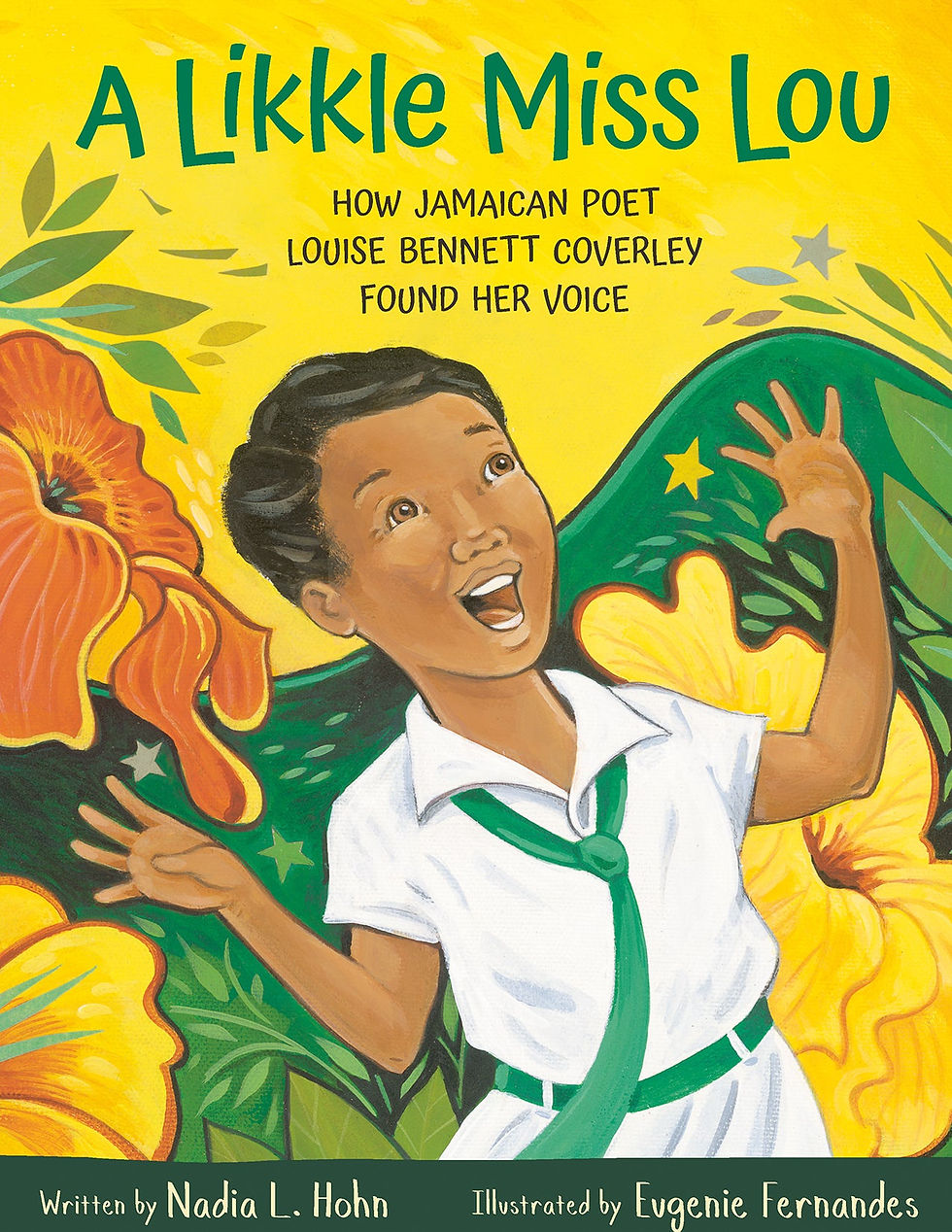
This picture book introduces the early life of Jamaican poet Louise Bennett Coverley and her developing confidence in the language and stories around her.
A useful conversation here is about whose language is welcomed. A child’s voice includes the words, sounds and family stories they bring to school. I’d connect this book with belonging and respect for culture, without suggesting that every difference can be resolved by confidence alone.
A question to try: What would help someone feel comfortable sharing the language they use at home?
I Have the Right to Be a Child
Alain Serres; illustrated by Aurélia Fronty; translated by Helen Mixter | Ages 4–7

This picture book names children’s rights directly, including education, safety, food and water. Its straightforward approach makes it a useful companion to stories that explore these ideas through characters.
I’d read it slowly and let a child choose one right to discuss. Being able to name a right gives a child clearer language than simply saying something feels wrong. This is the international selection in a list that otherwise centres Canadian writers and creators; its English-language publisher is Canada’s Groundwood Books.
A question to try: What does this right look like during an ordinary school day?
Middle-grade readers: fairness at school and in community
Shannen and the Dream for a School
Janet Wilson | Ages 9–12

This nonfiction book tells the story of Shannen Koostachin and the campaign for a safe school in Attawapiskat. It connects a young person’s advocacy with a community’s demand for equitable education.
I’d make room for both Shannen’s leadership and the adult responsibilities surrounding it. Celebrating a child’s courage shouldn’t leave us overlooking the conditions that made that courage necessary. This is a strong choice for moving a conversation from individual fairness to what schools and public institutions owe children.
A question to try: What should children be able to expect from their school without having to campaign for it?
Me and Banksy
Tanya Lloyd Kyi | Ages 10+

In this novel, school surveillance and the misuse of camera footage prompt students to question how they are being watched. Art becomes part of their response. The story includes humiliating images being shared, so it’s worth considering your child’s comfort with that subject.
This gives families a concrete way to discuss privacy alongside safety. I’d ask how students could raise a concern, what information they would need, and how adults could take their concerns seriously. Student participation needs a process that allows young people to question a practice and receive a meaningful response.
A question to try: What could students and adults decide together about privacy and safety?
The Antiracist Kitchen: 21 Stories (and Recipes)
Edited by Nadia L. Hohn; illustrated by Roza Nozari | Ages 9–12

This collection brings together personal stories and recipes from racialized writers, exploring food, identity and experiences of racism.
A lunch table is a practical place to begin a conversation about dignity. Imagine a child being mocked for food brought from home. I’d ask what support that child needs, what another student could say, and what an adult should do next. Sharing a recipe can open a conversation, but addressing discrimination also requires a response to the behaviour.
A question to try: If someone was teased about their lunch, what could we do that would actually help?
Older middle-grade readers and teens: participation and advocacy
You Can Be an Activist: How to Use Your Strengths and Passions to Make a Difference
Charlene Rocha and Mary Beth Leatherdale; illustrated by Drew Shannon | Ages 10–14

This practical guide introduces ways young people can research an issue, work with others and plan action. It offers a useful next step for readers who are beginning to ask what they can do.
I’d connect it with participation and shared responsibility. A child doesn’t have to be the loudest person in a group to contribute. Asking questions, gathering reliable information and helping with a plan are ways to participate too. Adults still have a role in helping young people assess safety and find appropriate support.
A question to try: What is one change you’d like to help with, and who could support your first step?
Love from A to Z
S. K. Ali | Ages 14+

This young-adult novel follows Zayneb and Adam through a developing relationship and significant personal challenges. Zayneb’s experience with an Islamophobic teacher brings discrimination and speaking up at school into the story. The novel also includes illness and grief.
For an older teen, I’d use this as an invitation to discuss how adults respond when a student reports discrimination. We can ask what evidence or support might help without making a young person’s dignity depend on presenting a perfect account. Leave room for the romance and the characters’ full lives, too; a rights conversation doesn’t need to consume the whole reading experience.
A question to try: What would a helpful adult response look like when a student says they’ve experienced discrimination?
Choose one book and leave room to listen
You don’t need to work through the whole list. Ask your local library about a title, choose one that interests your child, and let the conversation follow what they notice. A younger child may want to talk about a picture. A teen may want time before talking at all.
I want children to know they can speak about something that feels wrong without having to find the perfect words first. Learning about their rights can give them language for those conversations: “I didn’t feel safe.” “I wasn’t given a chance to explain.” “Can someone help me?” It can also help them recognize when someone else needs that same care and respect.
We can take those words seriously and still ask questions, listen to other perspectives, and help a child understand their own responsibilities. Children need opportunities to practise speaking up, and adults who will listen and help them work out what comes next.
If a story brings up a concern, try: “Tell me what felt unfair, and we’ll think about what could help.” Ask what happened, who was involved and whether they feel safe. Then work out an appropriate next step together, including which adult at school can help. Your child doesn’t have to carry the concern alone.
If these conversations bring up questions about your child’s experience at school, my free parent guide, How to Help Your Child Be Heard at School, offers a starting point for asking clearer questions and working constructively with the school.
Choose one book from this list to borrow or read together this week. If there’s a book that’s helped your family talk about fairness, belonging or speaking up, share the title in the comments. I’d like to hear what opened that conversation for you.
The classroom is rarely finished when the students arrive. A few labels are still missing, the tape holding up one corner of the bulletin board has already given up, and someone cannot find the pencil sharpener. Three students want the same seat, one child is standing quietly near the door, and the teacher is trying to remember twenty-five names while explaining where the water bottles go.
This is the first week of school.
Teachers carry a lot during those first few days. We are trying to make students feel welcome while also teaching them how to enter the room, move through the hallway, find materials, ask for help, share space, and get through a lesson without the whole thing unravelling. Structure helps. Children need to know what to expect, and teachers need routines that allow a room full of people to learn together.
But underneath every routine is another lesson. Students are learning who gets to make decisions. They are learning what happens when someone asks why. They are noticing whether disagreement is treated as useful information or an early sign of trouble. They are watching what adults do with uncertainty, mistakes, noise, and students who do not immediately fall into line.
Long before students can describe the culture of a classroom, they can feel it.

Classroom Expectations Are Never Just About Behaviour
Most teachers enter September with some expectations already in mind. We know that students cannot shout over one another, grab materials without permission, or leave the room whenever they feel like it. Safety and learning require boundaries. The question is how those boundaries are introduced and what students learn from the process.
I have seen classrooms where the rules are presented as a finished product. The teacher reads them aloud, explains the consequences, and asks whether anyone has questions. It is clear and efficient. It also communicates that the important decisions were made before the students arrived.
I have also seen teachers ask students to create every classroom rule themselves. That sounds democratic, but students are being asked to make decisions about a community they have barely entered. They do not yet know the people, the pressures, or the shared needs of the room.
There is useful space between those approaches. The adult can be honest about what is already decided while still inviting students to shape how the classroom will function. I might say, “Everyone here needs to be safe, able to learn, and treated with dignity. We are going to work together on what that looks like when the room is busy, when people disagree, and when someone makes a mistake.”
The teacher is still leading. The students also have a real role in building the community they are being asked to participate in. This is what student voice with structure can look like during the first week.
Pay Attention to What Happens When a Student Asks Why
There will be hundreds of decisions students do not control. They do not decide the timetable, the fire drill procedure, the curriculum expectations, or which hallway their class uses. Adult authority is part of school life, and sometimes adults need students to follow a direction immediately.
Still, students notice whether explanations are part of the relationship.
A child asks, “Why can’t we sit there?” The teacher may already be thinking about supervision, accessibility, a student who needs more space, or a routine that fell apart with the previous class. The child does not know any of that. They only know they were told no.
Sometimes the answer can be brief: “I need to be able to see everyone from where I’m standing. We can talk later if you think there is another arrangement that could work.”
The answer remains no for now. The student has still been treated as someone capable of understanding the decision.
I think teachers sometimes worry that explaining ourselves will turn every direction into a debate. It does not have to. Explanation and negotiation are different things. A student can understand why a boundary exists without being given control over the final decision. Authority feels different when it comes with clarity.
The Most Confident Voices Will Arrive First
During the first week, some students will make themselves known almost immediately. They will answer every question, tell you about their summer, volunteer to hand things out, and ask whether they can sit beside their friend. Other students will spend the week watching. They are trying to learn whether the room is safe before they show much of themselves.
A classroom can feel lively and welcoming while still being shaped by the same few voices. That is why participation cannot depend only on who raises a hand fastest. A student might contribute by writing something privately, speaking with a partner, adding an idea to a shared chart, or checking in with the teacher at the side of the room. Those options are especially important early in the year, before trust has had time to form.
By the end of the first few days, I would pay attention to who has spoken several times and who has not spoken at all. Silence does not automatically mean disengagement. Sometimes it means a student is still deciding whether their words will be protected once they leave their mouth.
The First Correction Tells Students a Great Deal
The first week will include conflict. Someone will interrupt. Someone will take another student’s marker. A child will refuse an activity. Two students will argue about whose turn it is. A carefully explained routine will fall apart almost immediately.
These moments are frustrating because teachers are working hard to establish some calm. They are also the moments when classroom values become visible.
Imagine one student repeatedly talking over another. The teacher could say, “Stop interrupting. You know the expectation.” That may stop the behaviour, but it does not help either student understand what the expectation is protecting.
Another response might sound like this: “Hold on. You will get a chance to speak, but Maya was still talking. Let’s give her the same attention you will want when it is your turn.”
That correction is still clear. It connects the boundary to another person rather than presenting it as an adult preference.
The language does not need to be perfect. Teachers are human, and nobody consistently produces a beautifully framed response in the middle of a difficult Tuesday afternoon. What students notice is the pattern. Do corrections protect dignity? Are students allowed to recover after a mistake? Does the adult stay curious long enough to understand what happened? Can the teacher admit when they reacted too quickly?
A classroom does not become safe because conflict disappears. It becomes safer when students begin to trust what will happen when conflict arrives.
Plan What Students Will Experience, Not Only What They Will See
Classroom setup usually focuses on the physical room. We decide where the supplies will go, which wall will hold student work, where the schedule should be posted, and whether the desks should face forward, sit in groups, or move into a circle.
Those decisions are worth making. I would also plan for the experiences students will have repeatedly.
How will a student ask for space? What can they say when someone crosses a boundary? What will happen when two students remember the same event differently? How will a student know that an adult is ready to listen? What will the teacher do after realizing they misunderstood the situation?
A few simple phrases can give students somewhere to begin: “Please stop.” “I need some space.” “Can I explain what happened?” “That did not feel okay to me.” “I need help solving this.”
These phrases may seem basic to an adult. Many students do not yet have them available when they are upset. Without language, students often rely on volume, withdrawal, physical reactions, or whatever behaviour has worked for them before. Teaching the words before the conflict gives students another option.
A Few Questions Before the Door Opens
As teachers prepare their classrooms, I would spend less time trying to predict every behaviour and more time thinking about how authority will feel in the room.
Which decisions are already made, and which ones can students help shape? Will students understand what our expectations are protecting? Can students ask why without being treated as difficult? What will correction sound like when I am tired? How will the students who speak least know their perspective is welcome?
The first week does not define the entire year. Teachers will change routines, revisit agreements, apologize, try again, and discover that something which worked beautifully with last year’s class falls apart with this one. That is part of teaching.
But those first few days do establish a direction. Students begin learning whether structure is something being done to them or something helping the community function. They begin learning whether their voice has a place before a problem occurs. They begin learning whether dignity survives correction.
The room may still be unfinished when they walk through the door. The relationship with power has already begun.