

Your child comes home upset, or you receive an email from school that leaves you with more questions than answers. A meeting gets booked. Before it happens, parents can feel pulled in two directions: you want to protect your child, and you also want a conversation with the school that actually helps.
In my work as an educator and principal, I’ve sat in many conversations with families where everyone cared about the same child but arrived with different pieces of the story. You don’t need to walk into that room with a perfect argument. You need enough clarity to explain what your child has shared, ask what you still don’t understand, and leave knowing what happens next.

Before the meeting, sort what you know
Sometimes a child tells you about a hard school day while they’re still upset, and you may only have one part of the story. The school may also be working from a partial picture. Slowing down before the meeting gives you room to separate three things: what you know, what your child felt or understood, and what you still need the school to clarify. Sorting the story doesn’t require you to doubt your child or assume the school is right. It simply keeps assumptions from hardening before everyone has had a chance to explain what they saw.
One thing I would listen for in the meeting is whether your child understood what happened, had a chance to explain their part, and knows what happens next. Those are concrete things you can ask about without turning the meeting into an argument over whose version is right. If you’re interested in thinking more about what rights like voice, dignity, and participation actually look like for children at school, I’ve written more about that in What Does a Right Actually Mean to a Child?.
Decide what you need from the conversation
Before the meeting, decide what you most need to understand or change. Are you looking for clarification about a decision? Support moving forward? Repair after a difficult interaction? A combination of those things? Choosing one main question can keep the meeting from becoming a review of every frustration your family has ever had with school. If you’re still working out how to raise a concern constructively, How to Advocate for Your Child at School Without Creating Conflict offers a broader starting point.
A simple preparation page can be surprisingly useful. Write down the one question you most need answered, what you want the school to understand about your child, what you hope will be clearer by the end of the conversation, and anything you don’t want to forget once the meeting starts. That is usually enough to keep you grounded when the conversation becomes emotional or complicated.
Bring your child’s perspective without making them carry the meeting
Before you go, ask your child what they want the adults to understand. You can also ask what felt unfair, confusing, or upsetting, what they wish had been explained better, and what would help school feel steadier tomorrow.
Younger children may answer with only a few words. Older students may want to attend part of the meeting or speak for themselves. Either way, their perspective can inform the conversation without requiring them to manage the adults around them.
Your child can be heard without being asked to carry adult responsibility. Adults still have to make decisions about safety, boundaries, support, and what happens next. Listening seriously to a child does not mean asking them to solve the situation themselves.
Start with questions that keep the conversation open
The first question can shape the tone of the meeting. Questions that ask for process and explanation give the school something concrete to respond to, while helping you understand whether your child had a chance to participate and what support is available now.
You don’t need to ask all of these. Pick the two or three that get closest to what you still don’t understand.
Can you help me understand how this decision was made?
Was my child given an opportunity to share their perspective?
How were expectations communicated before the issue came up?
What part of the situation do you think my child may still be confused about?
What support is in place moving forward?
Is there anything important I may not be seeing from the school side yet?
These questions leave room for information you may not have yet. They also give teachers and school leaders a better chance to explain what they were trying to do, which is especially useful when the experience your child describes and the experience the school describes don’t line up neatly.
If you disagree, stay specific
Parents can be firm without making the meeting combative. If you’re worried your child was singled out, opening with “Why was my child targeted?” can put everyone into defence before you have the full picture. A more workable starting point might be, “Can you help me understand how this was handled and what my child was told?” If you’re seeing a pattern, you can say, “I’m noticing this has come up more than once, and I’d like to understand what is happening across these situations.”
And sometimes you’ll hear an explanation and still feel that an important part of the concern hasn’t been addressed. You can say that too: “I understand what you’re explaining. I’m still unclear about what my child understood in the moment. Can we go back to that part?” Specific language gives everyone something concrete to respond to and gives you a clearer record if the concern continues.
Constructive advocacy doesn’t require you to agree with every explanation. You can say that a response doesn’t answer your concern, ask for a process to be explained again, request another meeting, or ask who the appropriate next person is when an issue remains unresolved. Keeping your language tied to the child, the process, and the evidence helps the conversation stay useful even when the disagreement is real.
Leave knowing what happens next
Before the meeting ends, slow down long enough to make the next step explicit. Ask what support will be in place, who is responsible for following up, when you should expect to hear back, what the school would like reinforced at home, and what your child will be told.
A simple way to do that is: “Can I make sure I have this right? What happens next, who is following up, and when should we check back in?” If there is a new plan, ask how everyone will know whether it is helping. Clear follow-up is especially important after an emotional conversation because people can leave the same meeting with very different understandings of what was agreed.
After the meeting, write it down
A short follow-up email can protect everyone from confusion. It can be as simple as: “Thank you for meeting today. My understanding is that we agreed to the following next steps…” Then list the few points you understood were decided and any question that still needs an answer. If the same concern continues over time, keep a simple record of dates, what happened, who was involved, what support was offered, and what changed afterward. Documentation helps you look for patterns instead of relying on memory during a stressful moment.
A useful meeting can still include disagreement
Families and schools won’t always see a situation the same way. A productive meeting doesn’t require complete agreement. What I would hope for is that the parent can bring the child’s experience clearly, the school can explain its own information and process, and everyone stays focused on what the child needs to understand and move forward.
If you’d like something beside you before, during, or after the meeting, the Parent Advocacy Conversation Guide includes preparation pages, conversation scripts, a meeting planner, a follow-up email builder, and a pattern tracker.
But you don’t need the download to use the approach in this article. Start with what you know. Name what you still need to understand. Bring your child’s perspective into the room. Ask clear questions. Leave with a next step you can actually follow.
For me, a useful school meeting doesn’t have to end in complete agreement. It should end with more clarity than it started with, a child whose experience has been taken seriously, and adults who know what happens next.
“That’s not fair.” When a child brings those words home from school, it can be difficult to know where to begin. We want to understand what happened. We also want to help our child explain what they need and think about what could happen next.
I’d begin with a conversation that gives the child time to speak. Books can offer another starting point. A character’s experience lets us ask about being heard, being safe or being included before asking a child to explain an experience of their own.
The thread I’d follow through this reading list is simple: help children recognise what they should be able to expect, find words for a concern, and identify adults who can help. Having a voice doesn’t mean getting every decision your way. It does mean being taken seriously.

Start with rights, then make them concrete
Children’s rights don’t depend on good behaviour. Safety, dignity and being heard aren’t rewards. Children also need guidance in respecting other people’s rights and repairing harm. Adults are responsible for providing the support and structure that make this possible.
In the Web of Rights, I bring these ideas together through shared language about dignity, voice, boundaries and responsibility.
The UN Convention on the Rights of the Child, explained by UNICEF, is a useful reference for families. It includes education, protection from discrimination, privacy, culture and children’s participation in decisions affecting them. The connections below are suggestions for family discussion, not claims that every book teaches the Convention directly.
This selection centres Canadian writers and creators, including Black and Indigenous voices and women authors. Age ranges are reading guidance, not a test of readiness. Choose with your child’s interests and comfort in mind, and feel free to read together.
This post includes Amazon affiliate links. As an Amazon Associate I earn from qualifying purchases. The books were selected for the conversations they can support with children. You can also look for them at your local library or independent bookstore.
Picture books: a starting point for younger children
Nibi’s Water Song
Sunshine Tenasco; illustrated by Chief Lady Bird | Ages 4–8

Nibi is looking for clean water. Her search grows into a shared effort, giving families a way to talk about an essential need and what happens when a community speaks up.
I’d use this story to ask who is responsible for making sure children have safe water. Children can help create change, but they shouldn’t have to earn access to something they need to live.
A question to try: Who could Nibi turn to for help, and what should the adults do?
A Likkle Miss Lou
Nadia L. Hohn; illustrated by Eugenie Fernandes | Ages 4–8
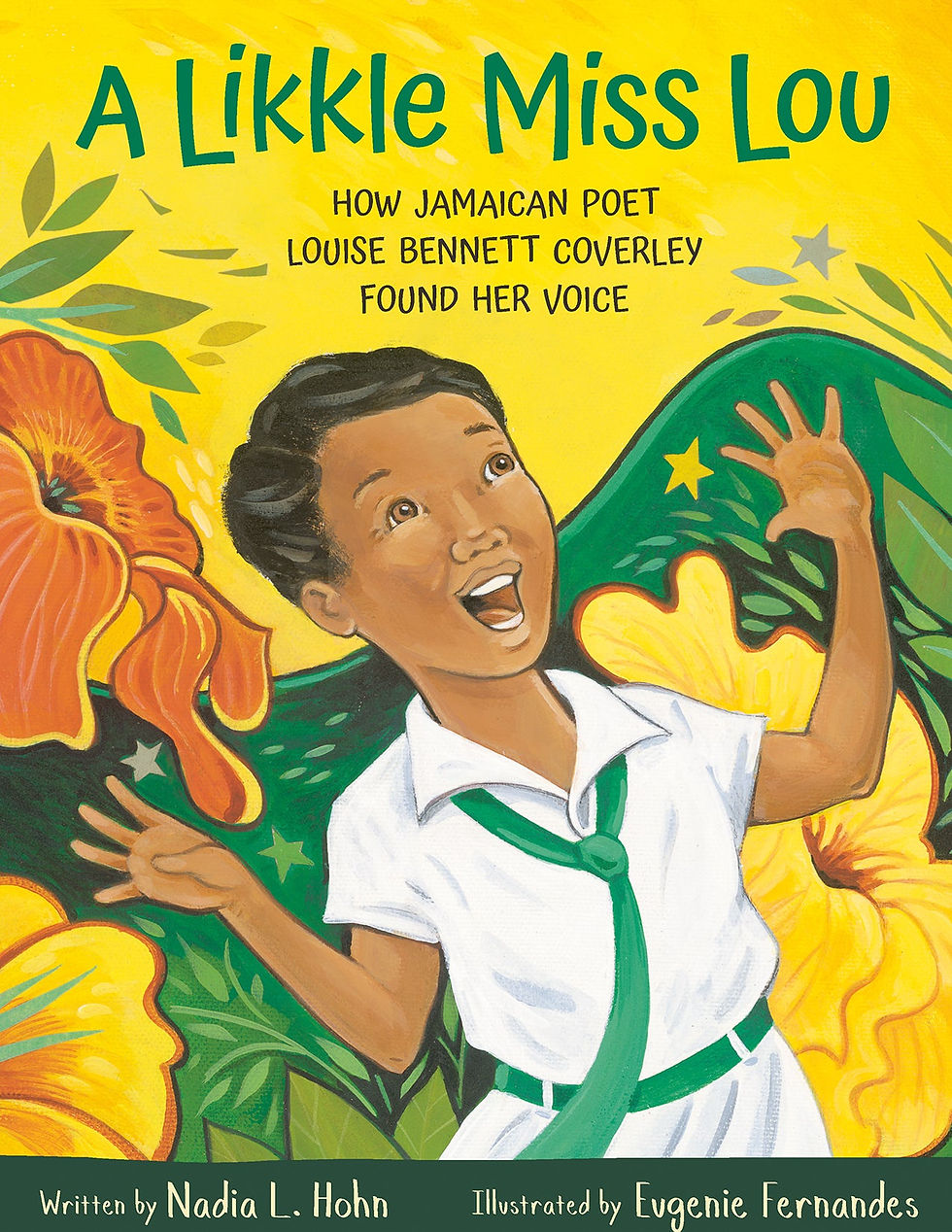
This picture book introduces the early life of Jamaican poet Louise Bennett Coverley and her developing confidence in the language and stories around her.
A useful conversation here is about whose language is welcomed. A child’s voice includes the words, sounds and family stories they bring to school. I’d connect this book with belonging and respect for culture, without suggesting that every difference can be resolved by confidence alone.
A question to try: What would help someone feel comfortable sharing the language they use at home?
I Have the Right to Be a Child
Alain Serres; illustrated by Aurélia Fronty; translated by Helen Mixter | Ages 4–7

This picture book names children’s rights directly, including education, safety, food and water. Its straightforward approach makes it a useful companion to stories that explore these ideas through characters.
I’d read it slowly and let a child choose one right to discuss. Being able to name a right gives a child clearer language than simply saying something feels wrong. This is the international selection in a list that otherwise centres Canadian writers and creators; its English-language publisher is Canada’s Groundwood Books.
A question to try: What does this right look like during an ordinary school day?
Middle-grade readers: fairness at school and in community
Shannen and the Dream for a School
Janet Wilson | Ages 9–12

This nonfiction book tells the story of Shannen Koostachin and the campaign for a safe school in Attawapiskat. It connects a young person’s advocacy with a community’s demand for equitable education.
I’d make room for both Shannen’s leadership and the adult responsibilities surrounding it. Celebrating a child’s courage shouldn’t leave us overlooking the conditions that made that courage necessary. This is a strong choice for moving a conversation from individual fairness to what schools and public institutions owe children.
A question to try: What should children be able to expect from their school without having to campaign for it?
Me and Banksy
Tanya Lloyd Kyi | Ages 10+

In this novel, school surveillance and the misuse of camera footage prompt students to question how they are being watched. Art becomes part of their response. The story includes humiliating images being shared, so it’s worth considering your child’s comfort with that subject.
This gives families a concrete way to discuss privacy alongside safety. I’d ask how students could raise a concern, what information they would need, and how adults could take their concerns seriously. Student participation needs a process that allows young people to question a practice and receive a meaningful response.
A question to try: What could students and adults decide together about privacy and safety?
The Antiracist Kitchen: 21 Stories (and Recipes)
Edited by Nadia L. Hohn; illustrated by Roza Nozari | Ages 9–12

This collection brings together personal stories and recipes from racialized writers, exploring food, identity and experiences of racism.
A lunch table is a practical place to begin a conversation about dignity. Imagine a child being mocked for food brought from home. I’d ask what support that child needs, what another student could say, and what an adult should do next. Sharing a recipe can open a conversation, but addressing discrimination also requires a response to the behaviour.
A question to try: If someone was teased about their lunch, what could we do that would actually help?
Older middle-grade readers and teens: participation and advocacy
You Can Be an Activist: How to Use Your Strengths and Passions to Make a Difference
Charlene Rocha and Mary Beth Leatherdale; illustrated by Drew Shannon | Ages 10–14

This practical guide introduces ways young people can research an issue, work with others and plan action. It offers a useful next step for readers who are beginning to ask what they can do.
I’d connect it with participation and shared responsibility. A child doesn’t have to be the loudest person in a group to contribute. Asking questions, gathering reliable information and helping with a plan are ways to participate too. Adults still have a role in helping young people assess safety and find appropriate support.
A question to try: What is one change you’d like to help with, and who could support your first step?
Love from A to Z
S. K. Ali | Ages 14+

This young-adult novel follows Zayneb and Adam through a developing relationship and significant personal challenges. Zayneb’s experience with an Islamophobic teacher brings discrimination and speaking up at school into the story. The novel also includes illness and grief.
For an older teen, I’d use this as an invitation to discuss how adults respond when a student reports discrimination. We can ask what evidence or support might help without making a young person’s dignity depend on presenting a perfect account. Leave room for the romance and the characters’ full lives, too; a rights conversation doesn’t need to consume the whole reading experience.
A question to try: What would a helpful adult response look like when a student says they’ve experienced discrimination?
Choose one book and leave room to listen
You don’t need to work through the whole list. Ask your local library about a title, choose one that interests your child, and let the conversation follow what they notice. A younger child may want to talk about a picture. A teen may want time before talking at all.
I want children to know they can speak about something that feels wrong without having to find the perfect words first. Learning about their rights can give them language for those conversations: “I didn’t feel safe.” “I wasn’t given a chance to explain.” “Can someone help me?” It can also help them recognize when someone else needs that same care and respect.
We can take those words seriously and still ask questions, listen to other perspectives, and help a child understand their own responsibilities. Children need opportunities to practise speaking up, and adults who will listen and help them work out what comes next.
If a story brings up a concern, try: “Tell me what felt unfair, and we’ll think about what could help.” Ask what happened, who was involved and whether they feel safe. Then work out an appropriate next step together, including which adult at school can help. Your child doesn’t have to carry the concern alone.
If these conversations bring up questions about your child’s experience at school, my free parent guide, How to Help Your Child Be Heard at School, offers a starting point for asking clearer questions and working constructively with the school.
Choose one book from this list to borrow or read together this week. If there’s a book that’s helped your family talk about fairness, belonging or speaking up, share the title in the comments. I’d like to hear what opened that conversation for you.
The first few weeks of school come with a lot of explaining. Where backpacks go. When students can get up. How to enter the room. What happens during independent work. What voices should sound like in the hallway. How technology is used. What to do when someone needs help. None of this is unnecessary.
Teachers need routines and students need structure. Thirty people cannot share a classroom well without some clear agreements about how they are going to live and learn together.
But I think there is a question we could ask more often when we establish those expectations: What is this rule actually protecting?

Take something simple like, “No running in the hallway.” Most students already know the rule. They have probably heard it hundreds of times. But knowing a rule and understanding it are not the same thing. If we stop and talk about the people using that hallway, the reason becomes clearer. Someone may be coming around the corner. A younger student may be carrying something. Another class may be working with the door open. Someone may need more physical space to move safely. Walking in the hallway is no longer just an adult preference. It is connected to safety, learning, and the rights of the people sharing that space.
That is a much more useful conversation than simply repeating the direction louder.
Ontario’s provincial Code of Conduct already frames school expectations around ideas such as dignity, respect for the rights of others, fair treatment, responsible citizenship, peaceful conflict resolution, and maintaining environments where people can learn and teach. Those are bigger ideas than rule-following. They describe what school expectations are supposed to protect.
The same thinking runs through the Web of Rights. Rights do not sit in isolation. They bump into each other all day long. My right to speak connects to your right to be heard. My freedom to move through the room connects to your right to feel safe. My need for a particular support may look different from yours because treating everyone fairly does not always mean treating everyone identically. The work is helping students see those connections and then giving them some structure for navigating them.
I saw this most clearly when I first started developing the Web of Rights with very young students. They understood personal preference and identity quickly. They knew I could not tell them what their favourite food was or what game they were allowed to enjoy. From there, we could begin talking about what happens when one person’s preferences bump into another person’s safety or boundaries. That is where the conversation becomes educational. Instead of shutting the whole thing down, we can ask what agreements are needed so more than one right can be protected.
The same approach works with ordinary classroom expectations.
Think about something as familiar as listening while someone else is speaking. We can say, “Don’t interrupt,” and leave it there. Or we can ask students why that agreement exists. A student may say it is hard to think when people talk over them. Another may point out that quieter students rarely get a chance to contribute. Someone else may recognize that listening is part of showing respect.
Now the class has something more useful than a rule. They have begun connecting voice, dignity, and participation.
That understanding becomes useful later, when the classroom gets messy.
If a student interrupts repeatedly, I can certainly remind them of the expectation. Sometimes that is all the moment requires. But I also have another question available: “Whose voice is being affected right now?” That moves the conversation beyond whether the student obeyed me. It asks them to think about impact.
That is a very different kind of learning.
And I know September is already full. Teachers are learning names, establishing routines, assessing students, answering family emails, navigating behaviour, troubleshooting technology, and trying to remember where they put the coffee they made twenty minutes ago. Nobody needs another elaborate first-week initiative.
So start with one expectation you were already going to teach. Ask what it protects. Let students talk about it.
Give them the language to connect that expectation to safety, dignity, voice, learning, belonging, or another right that fits the situation. Then use that same language when the expectation is tested. The Implementation Planner was built around this idea of making expectations visible, teachable, and shared rather than relying only on repeated reminders or consequences.
None of this means adults stop leading. Student voice does not require teachers to hand over every decision. There will always be moments when the adult in the room needs to make the call, especially when safety is involved. I have never understood student voice as the absence of adult responsibility. I understand it as part of responsible adult leadership.
The difference is that students are more than people we manage through the school day. They are learning how to live alongside other people. They are learning what to do when needs conflict, when boundaries are crossed, when someone feels unheard, or when their own choices affect somebody else.
Rules can help with that, but only if we teach the thinking underneath them.
So as classrooms settle into a new school year, I would spend a little less energy trying to create the perfect list of rules and a little more time helping students understand what those rules are there to protect.
That is where structure starts to become something students can understand, use, and eventually help uphold themselves.
Want to take this thinking into your classroom?
You don’t need to rebuild your classroom expectations all at once. Start with one rule, one routine, or one conflict that keeps coming up and ask what rights it is there to protect.
If you want some language and classroom examples to help you begin, the free Web of Rights Starter Guide walks through the framework, the foundational rights, and simple ways to start these conversations with students.